
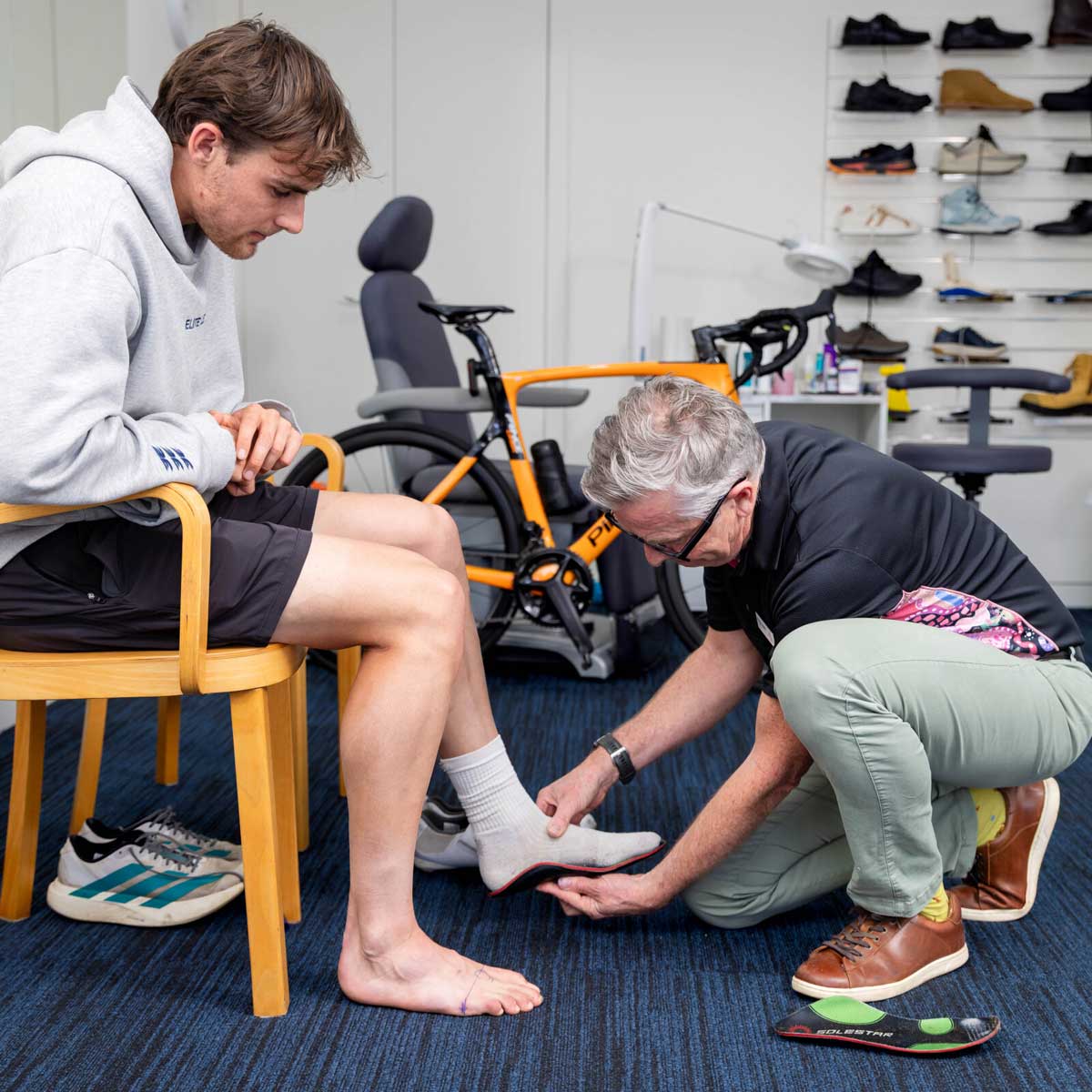
Orthotics in Geelong
At Total Care Podiatry, we offer professional and caring support for patients seeking relief from foot and lower limb discomfort through custom orthotics. Based in Geelong, our team of qualified podiatrists provides tailored solutions using advanced assessment tools and extensive clinical experience.
Orthotics are medical-grade shoe inserts designed to correct biomechanical issues and support proper foot function. Whether you’re suffering from plantar fasciitis, flat feet, or ongoing heel pain, custom orthotics can help alleviate pressure, distribute weight evenly, and improve alignment throughout the lower body.
Our podiatrist for orthotics will conduct a detailed biomechanical assessment to determine the most effective foot orthotics for your specific needs. Unlike over-the-counter options, our orthotics are custom-made for long-term support and comfort.
Custom orthotics for every lifestyle
We understand that every foot is different. That’s why we create fully custom orthotics suited to your daily routine; whether you’re on your feet all day at work, managing a chronic condition, or training for a marathon.
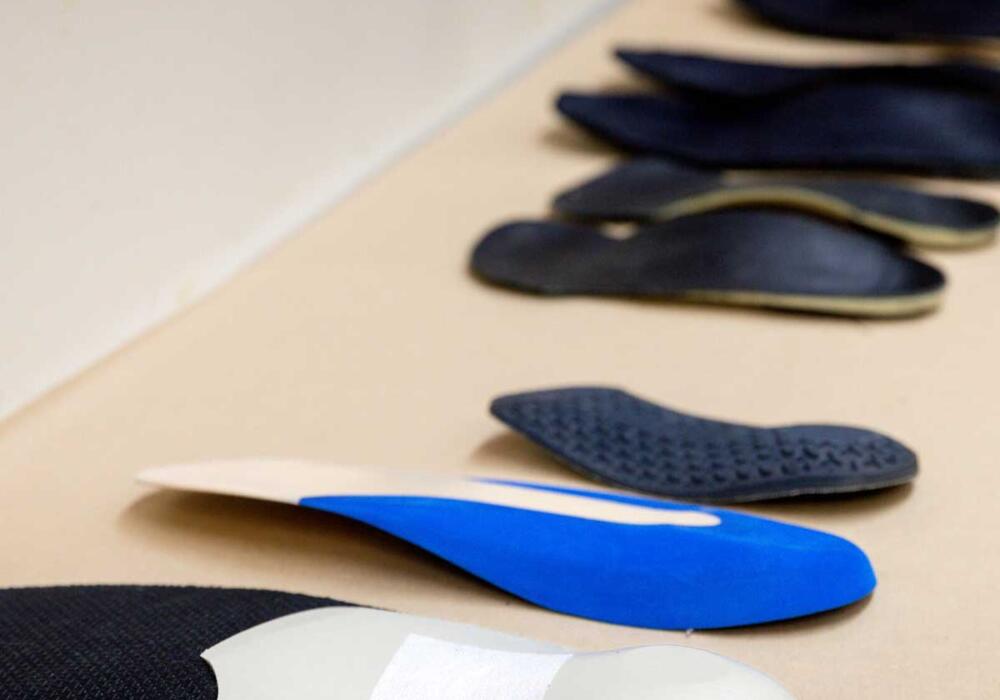
Our Geelong clinic offers a range of solutions, including:
- Foot orthotics for everyday wear
- Sports orthotics for athletes and active individuals
- Custom orthotics for children, adults, and seniors
Our orthotics are manufactured using high-quality materials designed to last. With proper care, your device will provide years of comfort and improved foot health.
Sports orthotics for active support
For athletes or those involved in high-impact activities, sports orthotics can reduce the risk of injury and enhance performance. These orthotics are designed to provide additional shock absorption and support for rapid movements, making them ideal for running, jumping, or change-of-direction sports.
How do we know which orthotics are best for you?
The key is to know what the orthotic needs to do to address your individual concerns. This will determine how complex the prescription needs to be.
If you want the best solution, the prescription is everything.
Total Custom orthotics
If you need to have your feet functioning at their absolute best, our Total Custom orthotics aim to restore your foot function to as close to optimum as possible. Your individual prescription is designed to encourage your body weight to move through each foot, so it is in the right place at the right time. This is important so forces are normalised through the structures designed to take them. In doing so, your joints, muscles and tendons are aligned to work optimally.
Total Support orthotics
If you have changes in your foot structure that have created high-pressure areas and inflammation, the Total Support orthotics will help. The changes in your feet may have occurred from:
- Arthritis; causing joint stiffness and deformity
- Diabetic pressure areas; increasing the risk of potential ulceration
- Previous injury; permanently altering the foot structure
Total Comfort orthotics
If you have tired and aching feet, Total Comfort orthotics are designed for your relief. They are made to the pressure profile of your feet when either walking or standing.
Do you have genetically loose joints? Sometimes called ‘double jointed, your feet and ankles are unstable and often significantly roll in or out. Sometimes the foot just collapses. The strain on the muscles and ligaments becomes very high resulting in continual tiredness, foot ache and will often lead to you not wanting to be active. Being inactive can then lead to weight gain making the condition worse. Total Support orthotics provide a balance of shock absorption and support.
At your initial examination, we start by understanding what your condition is and whether orthotics may be required initially, or after we have addressed other components that make up the reason you are having pain or limited mobility, such as inflammation, stress reactions, tissue damage, etc.
As part of the initial examination we use our 6 metre pressure walkway to assess your natural walking as well as functional movement and other research based examinations.
Expert podiatrist for orthotics in Geelong
At Total Care Podiatry, we pride ourselves on patient-centred care. Our team takes the time to understand your symptoms, activity level, and footwear needs to develop an orthotic solution that genuinely supports your lifestyle.
Book an appointment with one of our experienced podiatrists to find out how custom orthotics can support your foot health. You may also benefit from our shockwave therapy and laser therapy for additional pain relief and healing support.
FAQs about orthotics
How do we know which orthotics are best for you?
The key is to know what the orthotic needs to do to address your individual concerns. This will determine how complex the prescription needs to be.
If you want the best solution, the prescription is everything.
How does the treatment work?
Total Custom orthotics are designed to correct the function of the foot, and are combined with a staged program of strengthening to ‘rehabilitate’ the functional auto supportive systems of the feet, with the aim that ultimately, the orthotics are not required in day to day living.
Total Support orthotics, when prescribed to redistribute weight, are designed to effectively relieve pressure areas, ensuring that the areas where weight will be transferred to can cope with the increased stress. They are made from materials that absorb shock to protect the tissues and make walking much less uncomfortable.
Total Comfort orthotics are primarily designed for people with aching feet who can’t wait to get their shoes off at the end of the day. They’re not corrective orthotics, nor are they designed for people who have significant structural changes in their feet. The Total Comfort range of predesigned orthotics comes in a midfoot control or a rearfoot control design.
Total Support orthotics are designed to limit excessive motion that can become abnormal and, through adaptation over time, lead to increased risk of injury. They are made from a medium-density EVA material, providing a balance of shock absorption and support.
Usually, when Total Support orthotics are prescribed, we also provide a structured exercise plan with the aim of intrinsically improving the function of the joints and proprioception of the associated tissues. As the overall function of your feet improves, our Total Support orthotics can be easily adjusted to help achieve the maximum possible function of the auto supportive mechanisms of the foot.
What is the benefit of this treatment?
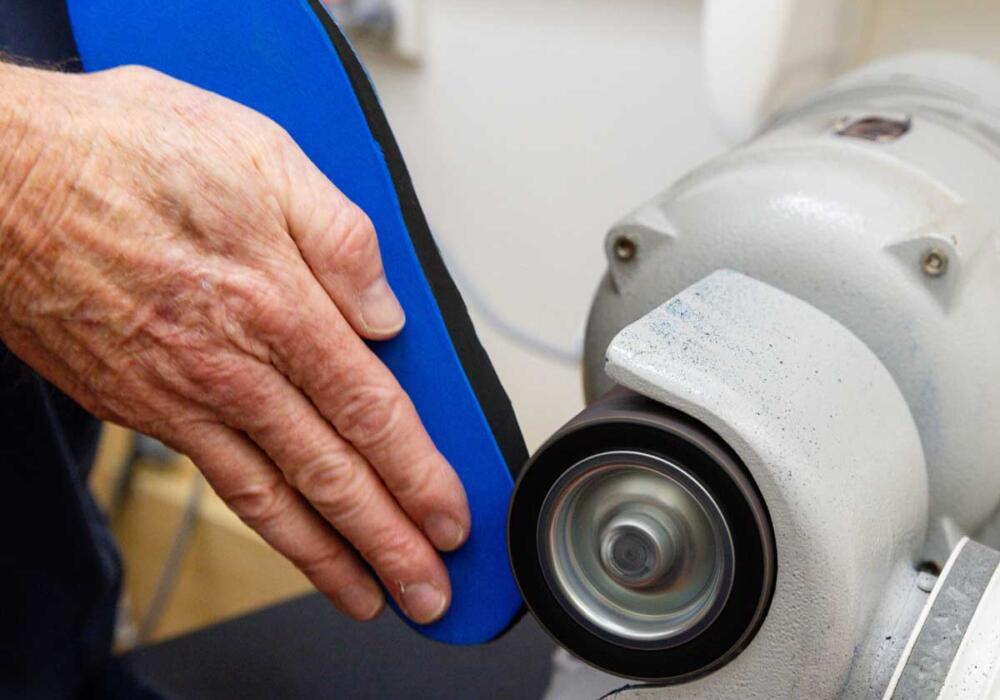
At Total Care Podiatry, all our orthotics are made in our own milling lab so we can control and guarantee the entire process from the design to the end result.
For Total Custom orthotics, a biomechanical analysis is required to design the correct orthotic prescription for you. Your orthotic prescription takes into account five sources of information:
- Our understanding of your concerns and what you want to achieve
- The examination from both the initial consultation and your biomechanical analysis
- The 2D and 3D image models of your feet
- The pressure mapping (force placement and timing) of your feet in standing, walking and running (if applicable)
- The high-speed video of your gait, both front and side views
Once the design has been created on the computer, it is sent to our in-house milling machine to have the exact design created for you.
Often, you may be given exercises, have mobilisation of the joints of your feet and ankles or be referred for soft tissue therapy to ensure your muscles and joints can adapt to the correction of the orthotic, and will work with the orthotic, not against it. These supportive treatments also make getting used to the orthotic correction during the ‘wearing-in’ period a whole lot easier!
What’s the best type of Orthotic for me?
- Orthotics that provide cushioning
If you have tired and aching feet, these orthotics are designed for relief. Our Total Comfort orthotics are made to the pressure profile of your feet when walking or standing. They’re not corrective orthotics, nor are they designed for people who have significant structural changes in their feet. They are primarily designed for the large number of people who don’t have a painful condition but can’t wait to get their shoes off at the end of the day as their feet ache. - Orthotics that redistribute weight
If you have changes in your foot structure that have created high-pressure areas and inflammation, the Total Support orthotics will help. The changes in your feet may have occurred from: - Arthritis, causing joint stiffness and deformity
- Diabetic pressure areas; increasing the risk of potential ulceration
- Previous injury, permanently altering the foot structure
Our Total Support orthotics are designed to redistribute the weight effectively off the pressure areas, ensuring that the areas where weight will be transferred to can cope with the increased stress. They are made from materials that absorb shock to protect the tissues and make walking much less uncomfortable.
- Orthotics that limit excessive motion
Do you have genetically loose joints? Sometimes called ‘double jointed, your feet and ankles are unstable and often significantly roll in or out. Sometimes the foot just collapses. The strain on the muscles and ligaments becomes very high, resulting in continual tiredness, foot ache and will often lead to you not wanting to be active. Being inactive can then lead to weight gain, making the condition worse.
Our Total Support orthotics use a medium-density EVA material, providing a balance of shock absorption and support. Your individual prescription is designed to limit excessive motion that can become abnormal and, through adaptation over time, lead to increased risk of injury.
Usually, when Total Support orthotics are prescribed, we provide a structured exercise plan to intrinsically improve the function of the joints and proprioception of the associated tissues. As the overall function of your feet improves, our Total Support orthotics can be easily adjusted to help achieve the maximum possible function of the auto-supportive mechanisms of the foot.
Orthotics that correct the function of feet
If you need to have your feet functioning at their absolute best, Total Custom orthotics aim to restore your foot’s function to as close to optimum as possible. Your individual prescription is designed to encourages your body weight to move through each foot so it is in the right place at the right time. This is important so forces are normalised through the structures designed to take them. In doing so, your joints, muscles and tendons are aligned to work optimally.
Your Total Custom orthotics can be made from a large range of materials, depending on the required use for sport, work or active lifestyle, your shoe type, the level of correction you require and your body’s requirements.