
Diabetes foot care in Geelong
At Total Care Podiatry, we provide thorough and compassionate diabetes foot care to help you stay active, independent, and pain-free. Diabetes can significantly impact the health of your feet, increasing the risk of nerve damage, circulation problems, and slow-healing wounds. That’s why regular diabetic foot assessments are essential.
Our experienced team in Geelong offers proactive care to help prevent complications and support your overall wellbeing.
Our podiatrists create tailored treatment plans based on your risk level, medical history, and lifestyle. Early detection of changes in sensation or circulation allows for prompt intervention, reducing the likelihood of severe complications.
We work closely with your GP and other health professionals to ensure your diabetes foot care is integrated into your broader diabetes management plan.
Why is diabetic foot assessment important?
High blood sugar levels can lead to peripheral neuropathy (loss of sensation) and peripheral vascular disease (poor circulation). These conditions reduce your ability to feel injuries or heal wounds, putting you at higher risk of infections, ulcers, and even amputation if left untreated.
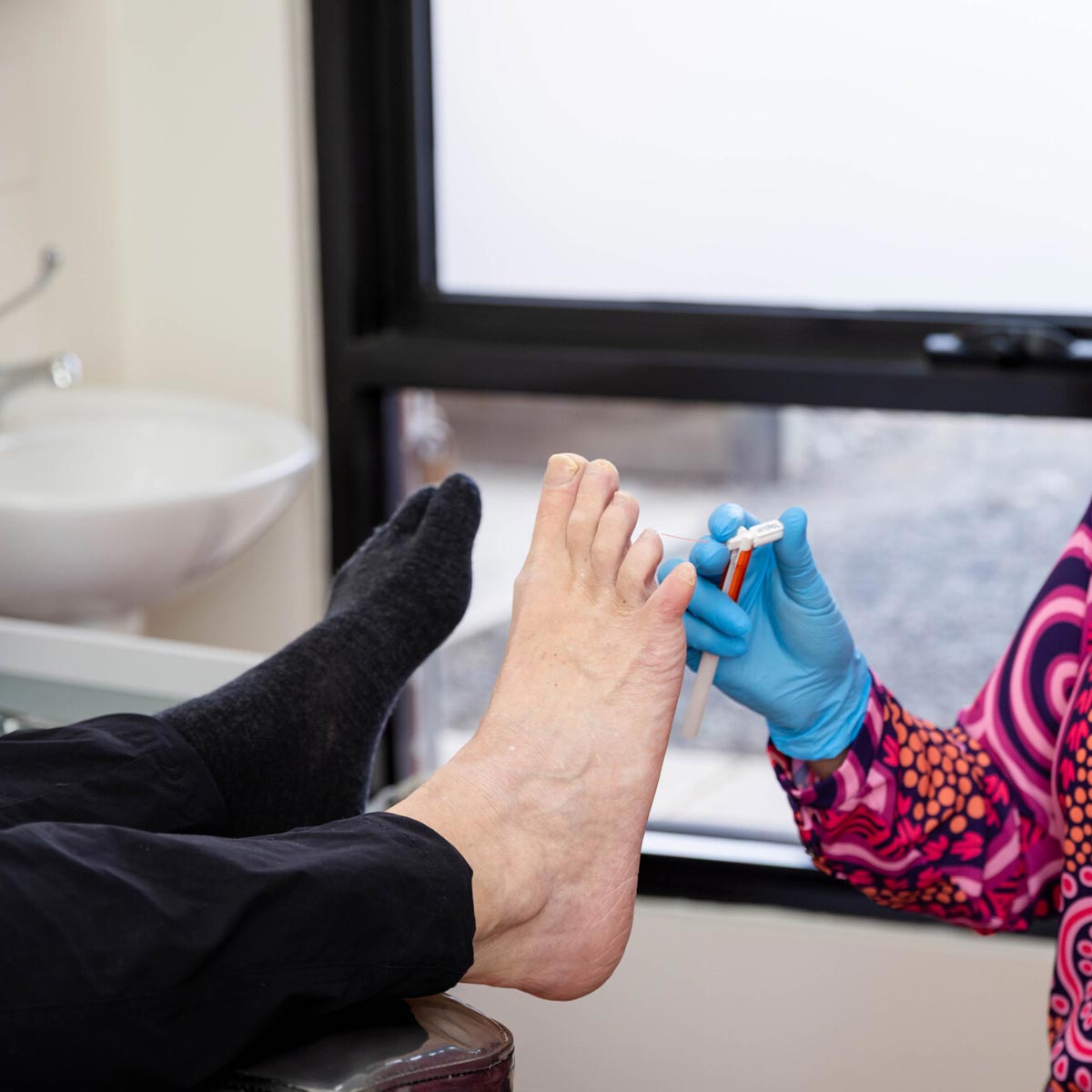
A diabetic foot assessment at Total Care Podiatry includes looking at the following:
- Doppler ultrasound of the blood flow (circulation)
- Feeling and reflexes (nerves)
- Unusual foot shapes (including bunions, claw toes and hammer toes)
- Toenails
- Dryness, calluses, corns, cracks or infections.
- Joint mobility
Regular checks by a podiatrist for diabetes-related conditions are recommended at least once a year, or more frequently if you’re considered high risk.
Our Geelong-based team is trained in the early detection and treatment of diabetic foot complications. We take a caring and preventative approach, supporting you with education and advice to maintain healthy feet for life.
Take a proactive step in managing your health with regular diabetes foot care. Book a diabetic foot assessment at our Geelong clinic. You may also benefit from related services such as general foot and skin/nail care or nail surgery and Onyfix for comprehensive support.
FAQs about diabetes assessments
How often should I have a diabetic foot assessment?
At least once a year, or more frequently if you’ve had previous ulcers, poor circulation, or nerve damage.
Which conditions does this service treat?
You may be surprised to know that diabetes is now the world’s fastest-growing chronic disease. Over one million Australians have diabetes. Alarmingly, about 50 per cent of people with diabetes are not even aware they have it. While prevention is certainly ideal, early diagnosis and treatment are the next best thing.
our feet are supplied with blood to keep them healthy. They also have a multitude of nerves that act as an emergency warning system. For example, if you have a stone in your shoe, nerves will send a message to your brain to investigate. However, if your diabetes is poorly controlled for a long period of time, this may lead to:
- nerve damage, or ‘peripheral neuropathy’, which impairs sensation to the feet,
- poor circulation orreduced blood supply.
Nerve damage may mean that you no longer notice the stone in your shoes, due to loss of sensation to your feet. This could then lead to an injury you can’t feel, and possibly infection.
If you have poor circulation, you will need to take extra care to protect your feet from injury. Most foot problems in people who have diabetes occur when injuries – often infections – go unnoticed and untreated, or when healing is delayed due to poor circulation.
What complications can diabetes cause?
If you have poor circulation, any injuries or infections to your feet, such as cuts, burns or scratches, will take longer to heal. This is because blood provides energy to working muscles and aids in healing tissue damage. When there is less blood flowing into the arteries in your feet the healing process slowed.
People with diabetes who have misshapen feet and nerve damage are more likely to develop:
- Ulcers from too much pressure over some areas of the feet
- More corns and calluses due to too much pressure on one area.
Complications from diabetes can be avoided through regular monitoring and treatment of your feet by the podiatrist.
Can a podiatrist help if I already have complications?
Yes. We offer wound care, pressure offloading, and footwear advice to manage existing problems and prevent worsening.